

 There is a moment most of us remember, a teacher who believed in us before we believed in ourselves, a manager who asked what we needed instead of telling us what to do, a colleague who sat with us in the uncertainty of a new role and said, you've got this.
Mentoring in schools can be more than supporting NQT's, or middle managers into higher leadership. And it can be so much more than recruiting learning and behaviour mentors to manager poor student behaviour.
Mentoring in schools should be a whole school culture. And building that culture requires understanding that mentoring can look and feel different to each mentee, but still work effectively and seamlessly to enhance outcomes.
When schools invest in building a genuine mentoring culture, equipping every staff member with the tools, the confidence, and the backing of their leadership, something remarkable happens.
The relational work that educators were already quietly doing becomes visible, valued, and consistent. Students experience that care and non judgemental support not just from one trusted adult but from many. Outcomes improve, not because staff suddenly work harder, but because the effort they were already giving is finally working within a structure that amplifies it. A whole-school mentoring culture does not add to what teachers do, it gives meaning, shape, and impact to what they were always doing anyway.

Teaching is one of the most demanding professions on the planet. The emotional labour alone, holding the wellbeing of thirty young people in a single classroom, day after day, class after class, is something few outside education truly understand. School staff need a mentor who arrives with genuine curiosity and the deep respect that the work deserves.
A whole-school mentoring culture also values support staff, demonstrating that every person who walks through the school gate as a staff member, regardless of their title or their hours, is both deserving of mentoring and capable of providing it. When support staff are included in mentoring and coaching conversations, equipped with the same tools as teachers, and invited into the professional learning community as full participants, the entire school benefits. Teachers feel less alone. Students receive more consistent care. And the people who have always quietly held the school together finally feel the weight of that contribution being seen.
Mentoring school staff should acknowledge that the people in the room are already capable, already caring, and already trying. The role of the mentor is not to fix but to support, to create a space where a teacher and support staff can exhale, think out loud, and reconnect with their own wisdom. The GROW model works beautifully here because it honours that. It does not impose answers from the outside; it draws out the clarity that already exists within.
When school leaders adopt a coaching posture, asking before advising, listening before responding; something quietly powerful happens. Staff feel trusted. Conversations deepen. The culture shifts from one of performance pressure to one of genuine professional growth. Burnout decreases, and staff feel less alone in navigating it.
Mentoring also builds bridges across experience levels. When seasoned educators share what they have learned with early-career teachers, institutional knowledge is passed on with warmth rather than lost to turnover. And when newer staff bring fresh energy and perspective to those same conversations, everyone benefits.
The best mentoring cultures in schools are reciprocal where learning flows in every direction and no one is too senior to grow.

As for students, they often do not arrive at a mentoring conversation ready to reflect.
They arrive mid-storm, carrying a conflict from second period, anxiety about the future, or the invisible weight of something happening at home. Effective mentors know that the first job is not to coach but to connect. You earn the right to the goal-setting conversation by first being present for the one they didn't plan on having.
Mentoring students also requires meeting students where they are at, their pace, and their frame of reference. Tools like the FAST GROW model, the CTB Triangle, and de Bono's Thinking Hats work precisely because they give young people a vocabulary for their own inner world. When a student can name what their thinking, not just their circumstances, is shaping their behaviour, something shifts.
They stop being passengers in their own story and start becoming the driver.
The goal of mentoring students is not just to resolve today's challenge, but to prepare for their future. It is to build the self-awareness, resilience, and relational intelligence that will serve them for the rest of their life, in every classroom, workplace, and relationship they enter.
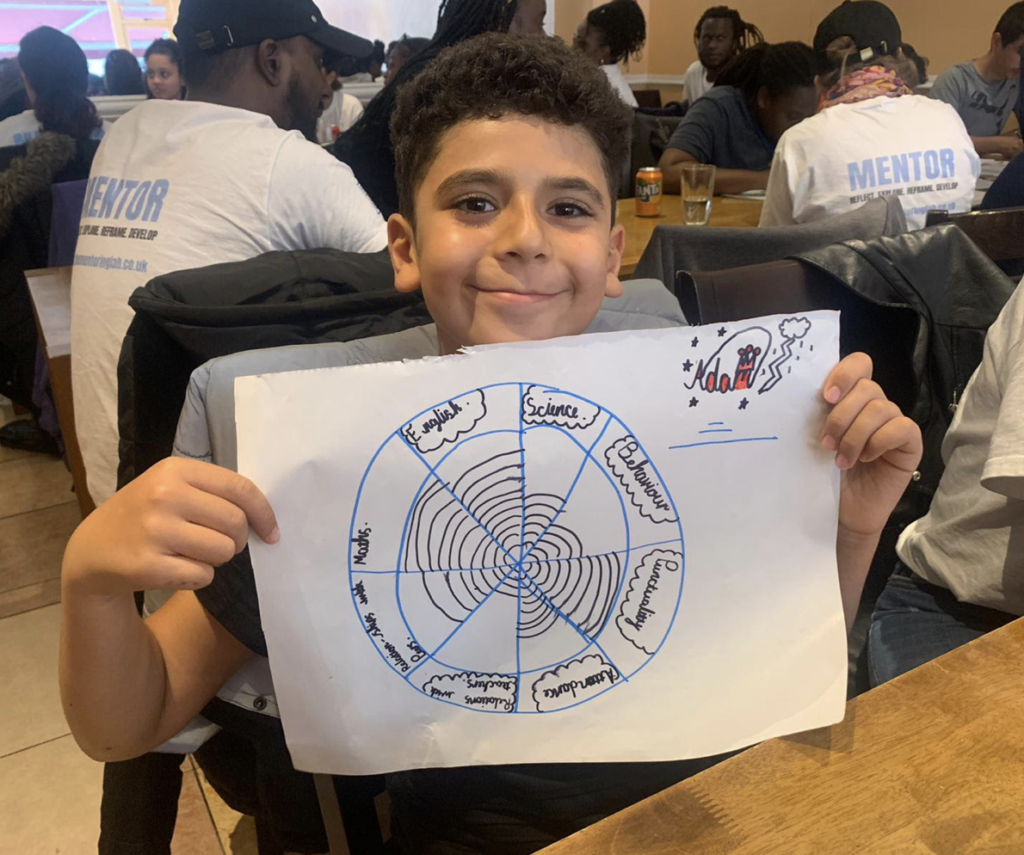
Whether you are mentoring a Year 9 student through exam anxiety or a new manager through their first difficult performance conversation, the fundamentals are the same: be curious, not judgemental. Ask more than you tell. Believe in the other person's capacity to find their own way, with the right support beside them.
Schools that build this culture produce people who thrive. Organisations that embed it develop teams who extend it naturally to the students, building the kind of community where everyone grows.
BOOK TODAY
Book yourself onto our CPD Youth Mentoring training courses
CALL OUR TEAM
or to discuss how we can develop a whole school mentoring culture at an affordable price, call us on 02081588500 or 07412640174.